
Protective Coatings
High-performance coating systems designed to protect your assets from corrosion, weather, chemical exposure, and fire—extending service life and reducing long-term maintenance costs across Los Angeles and Southern California.
What Are Protective Coatings?
Protective coatings are specialized paint and lining systems engineered to shield metal, concrete, and other substrates from the destructive effects of corrosion, chemical attack, UV degradation, moisture intrusion, and extreme temperatures. Unlike decorative paint, industrial protective coatings are formulated for performance—delivering measurable barrier protection, cathodic protection, or fire resistance depending on the system selected.
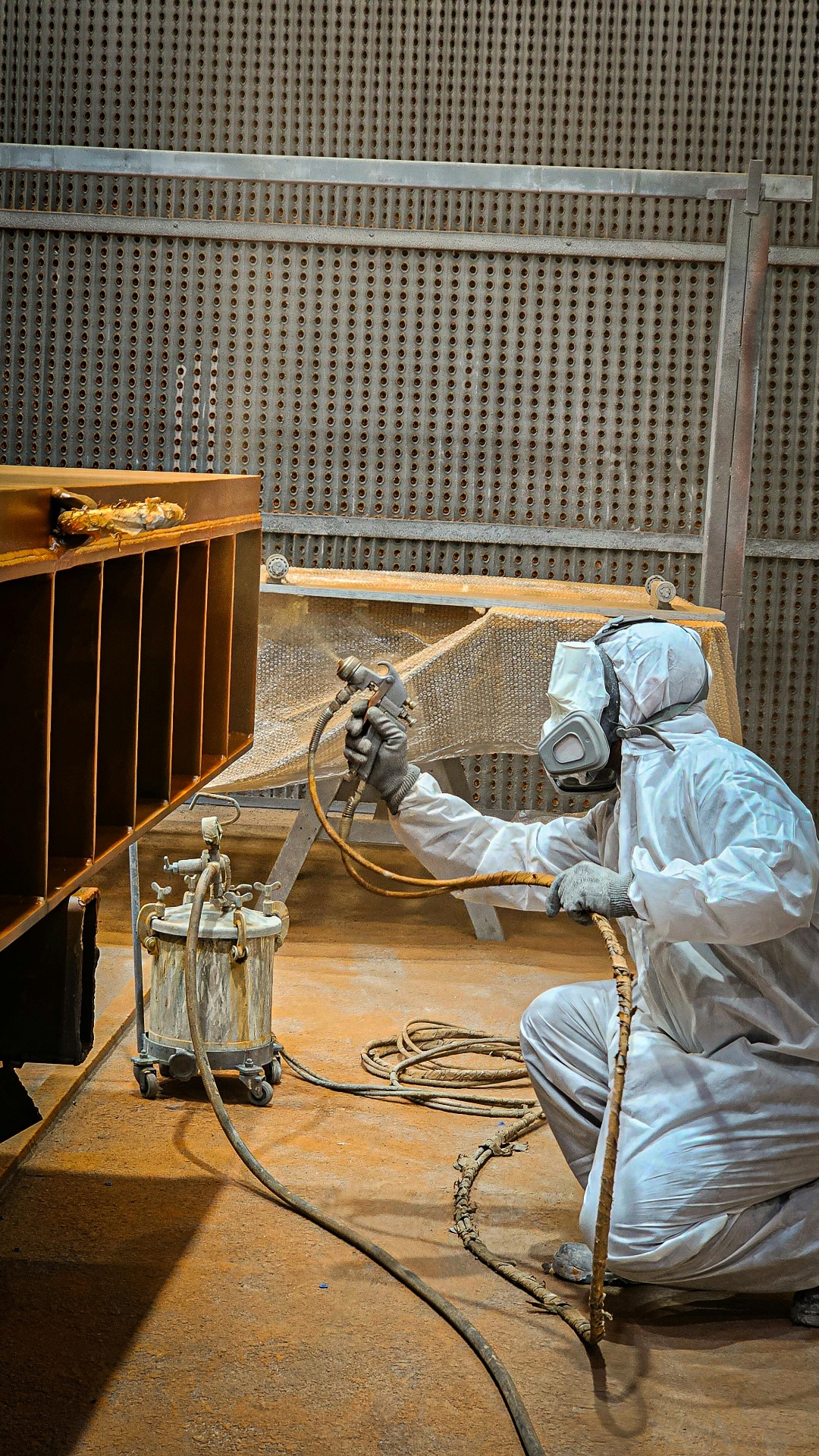
At DBrothers Painting Inc, we apply complete coating systems—from primers through topcoats—using airless spray, plural-component spray, brush, and roller techniques. Every project follows manufacturer specifications and SSPC/NACE application standards to ensure maximum coating performance and longevity.
Even the best coating will fail if applied to a poorly prepared surface. That's why we perform all surface preparation in-house—controlling quality from blast to final coat. Proper surface cleanliness and anchor profile are the foundation of every successful coating system. Learn more about our surface preparation services →
What We Offer
- Epoxy & Polyurethane Systems
Multi-coat epoxy/polyurethane systems for structural steel, tanks, pipe racks, and equipment. The industry standard for long-term corrosion protection with UV-resistant topcoats.
- Zinc-Rich Primers
Inorganic and organic zinc-rich primers providing cathodic (sacrificial) protection to steel substrates. Essential for immersion service, marine environments, and high-corrosion areas.
- Marine-Grade Anti-Corrosion Coatings
Specialized coating systems for vessels, dock structures, marine terminals, and offshore platforms. Engineered for continuous saltwater exposure and splash-zone service.
- Fire-Resistant & Intumescent Coatings
Thin-film intumescent and cementitious fireproofing for structural steel to meet building code fire rating requirements (1-hour, 2-hour, 3-hour ratings).
- Chemical-Resistant Linings
Novolac epoxy, vinyl ester, and polyurea linings for tanks, secondary containment, and process equipment exposed to aggressive chemicals, acids, and solvents.
Coating Systems Guide
Every environment demands a different coating strategy. Here are the primary systems we specify and apply.
Epoxy / Polyurethane
The workhorse of industrial coating. Epoxy primer provides chemical resistance and adhesion; polyurethane topcoat delivers UV stability and gloss retention. Typical DFT: 8–12 mils total system.
Best for: Structural steel, equipment, exteriors
Zinc-Rich / Epoxy / Urethane
Three-coat system with inorganic zinc primer for cathodic protection, epoxy intermediate for barrier protection, and urethane topcoat for weather resistance. The gold standard for critical steel assets.
Best for: Bridges, marine, high-corrosion service
Polysiloxane
Hybrid inorganic/organic coating that combines the durability of a silicone with the toughness of an epoxy. Exceptional UV and gloss retention. Can often replace a three-coat system with two coats, reducing labor costs.
Best for: Long-term exterior exposure, color retention
Intumescent Fireproofing
Thin-film coatings that expand up to 50x their thickness when exposed to fire, forming an insulating char layer. Maintains the architectural appearance of exposed steel while meeting fire code requirements.
Best for: Structural steel fire protection
High-Temperature Coatings
Silicone-based and ceramic-filled coatings rated for continuous service temperatures up to 1200°F. Used on exhaust stacks, heat exchangers, boilers, and process piping in refinery and power generation environments.
Best for: Exhaust systems, stacks, hot piping
Chemical-Resistant Linings
Novolac epoxy, vinyl ester, and polyurea systems for immersion and chemical containment service. Applied to tank interiors, secondary containment areas, and process equipment handling acids, caustics, and solvents.
Best for: Tanks, containment, chemical processing
Application Methods
We use the right application method for every coating type and project condition to achieve optimal film build, adhesion, and finish quality.
Airless Spray
High-pressure airless spray equipment atomizes coating without compressed air, producing a thick, even film with minimal overspray. The primary method for large-area application of epoxies, polyurethanes, and single-component coatings. Delivers consistent DFT (dry film thickness) at production rates far exceeding brush or roller.
- High production rates for large surfaces
- Consistent film thickness across the surface
- Suitable for most coating types
Plural-Component Spray
Two-component coatings (like polyurea, plural-component epoxies, and fast-cure urethanes) are mixed at the spray gun rather than in a pot. This allows application of rapid-set materials that would gel too quickly in a conventional pot. Essential for polyurea linings, plural-component zinc primers, and thick-film rapid-return-to-service coatings.
- No pot life concerns—material mixed at the gun
- Ideal for fast-cure and high-build coatings
- Precise mix ratio control
Our Coating Process
Specification Review
We review the coating specification, identify the correct products, calculate material quantities, and develop an application plan that addresses access, ventilation, environmental monitoring, and quality checkpoints.
Surface Preparation
Surfaces are abrasive blasted or power-tool cleaned to the specified SSPC/NACE standard. Profile depth and cleanliness are verified with instruments before any coating is applied.
Coating Application
Each coat is applied within the manufacturer's recoat window, at the specified DFT, and under monitored environmental conditions (temperature, humidity, dew point). Wet film thickness is checked continuously during application.
Inspection & Documentation
Final DFT readings, adhesion testing, holiday detection (for linings), and visual inspection are performed. Complete documentation including batch numbers, environmental logs, and test results is provided.
Why Invest in Protective Coatings?
Corrosion Protection
Prevent rust and structural degradation that can lead to costly repairs, safety hazards, and premature asset replacement.
Weather Resistance
UV-stable topcoats resist chalking, fading, and erosion—maintaining appearance and protection in Southern California's intense sun.
Chemical Resistance
Specialty linings protect tanks and equipment from acids, alkalis, solvents, and other process chemicals that would destroy uncoated steel.
Reduced Lifecycle Cost
A properly specified and applied coating system pays for itself many times over by extending asset life and eliminating premature replacement.
Industries We Serve
Our protective coating services support a wide range of industrial sectors across Southern California.
Marine & Port Facilities
Anti-corrosion and anti-fouling coatings for vessels, dock structures, marine terminals, and port infrastructure. We understand the aggressive corrosion environment of saltwater immersion and splash zones.
Oil, Gas & Petrochemical
Tank linings, pipe coatings, process vessel protection, and structural steel coatings in refinery environments. Chemical-resistant linings for secondary containment and process equipment.
Infrastructure & Bridges
Long-life zinc-rich/epoxy/urethane systems for bridge steel, highway structures, and municipal infrastructure. Lead paint abatement and re-coating with modern high-performance systems.
Commercial Construction
Intumescent fireproofing for exposed structural steel, waterproofing membranes for parking structures, and decorative high-performance coatings for architectural metals.
Water & Wastewater
NSF-certified potable water tank linings, wastewater treatment plant coatings, and chemical-resistant linings for clarifiers, digesters, and chemical storage facilities.
Heavy Equipment & Machinery
OEM-quality refinishing for construction equipment, cranes, material handling systems, and industrial machinery. Custom color matching available for fleet consistency and branding.
Frequently Asked Questions
What types of protective coatings do you apply?
We apply a full range of industrial protective coatings including epoxy primers, polyurethane topcoats, zinc-rich primers, polysiloxane systems, intumescent fireproofing, elastomeric waterproofing, and specialty chemical-resistant linings. Each coating system is selected based on the service environment, substrate type, and performance requirements specified by the coating manufacturer and project engineer.
How long do industrial protective coatings last?
The service life of a protective coating system depends on the environment, coating type, surface preparation quality, and application conditions. A properly applied multi-coat epoxy/polyurethane system on well-prepared steel can last 15–25 years in moderate industrial environments. Marine and immersion service coatings typically require maintenance at 10–15 year intervals. Zinc-rich primers can provide 25+ years of corrosion protection when topcoated properly.
How much do protective coatings cost in Los Angeles?
Protective coating costs in Los Angeles typically range from $3.00 to $12.00 per square foot for a complete system (surface preparation + primer + topcoat), depending on the coating specification, number of coats, surface condition, access difficulty, and environmental requirements. High-performance systems like zinc-rich/epoxy/polyurethane or intumescent fireproofing will be at the higher end. Contact us for a project-specific estimate.
What is the difference between epoxy and polyurethane coatings?
Epoxy coatings provide excellent adhesion, chemical resistance, and corrosion protection—making them ideal as primers and intermediate coats. However, epoxies chalk and degrade under UV exposure. Polyurethane coatings offer superior UV resistance, gloss retention, and color stability, making them the preferred topcoat for surfaces exposed to sunlight. Most industrial coating systems combine both: epoxy for protection and polyurethane for weatherability.
Do you offer fire-resistant coatings?
Yes, we apply intumescent and cementitious fireproofing coatings for structural steel. Intumescent coatings are thin-film products that expand when exposed to heat, forming an insulating char that protects the steel from reaching critical temperatures. We apply these coatings to meet 1-hour, 2-hour, and 3-hour fire ratings as specified by the building code and project fire protection engineer.
What standards do you follow for coating application?
We follow SSPC (Society for Protective Coatings) and NACE International standards for all coating work. This includes SSPC-PA 2 for dry film thickness measurement, SSPC-PA 1 for shop and field application, and ASTM D4541/D4541 for adhesion testing. Our applicators are trained in proper mixing, thinning, application techniques, and environmental monitoring to ensure coatings perform to specification.
Protect Your Investment
Get a free quote for your protective coating project. DBrothers Painting Inc serves Los Angeles County, Orange County, Ventura County, Riverside County, San Bernardino County with professional coating application for industrial, marine, and commercial structures.