
Surface Preparation Services
Comprehensive surface preparation ensuring optimal adhesion and maximum lifespan for protective coating systems across Los Angeles and Southern California.
Why Surface Preparation Is the Most Critical Step
According to NACE International, up to 80% of all coating failures can be traced back to inadequate or improper surface preparation. No matter how advanced or expensive your coating system is, it will only perform as well as the surface beneath it allows.
At DBrothers Painting Inc, we treat surface preparation as the foundation of every project. Our certified technicians follow SSPC, NACE, and ISO standards to ensure your substrate is properly cleaned, profiled, and conditioned before any coating is applied. This disciplined approach is what separates a coating that lasts 5 years from one that protects for 20+.
Skipping proper surface preparation may save time upfront, but premature coating failure leads to costly rework, asset downtime, and accelerated corrosion damage. Investing in thorough preparation upfront saves 3-5x in long-term maintenance costs.
Our Preparation Methods
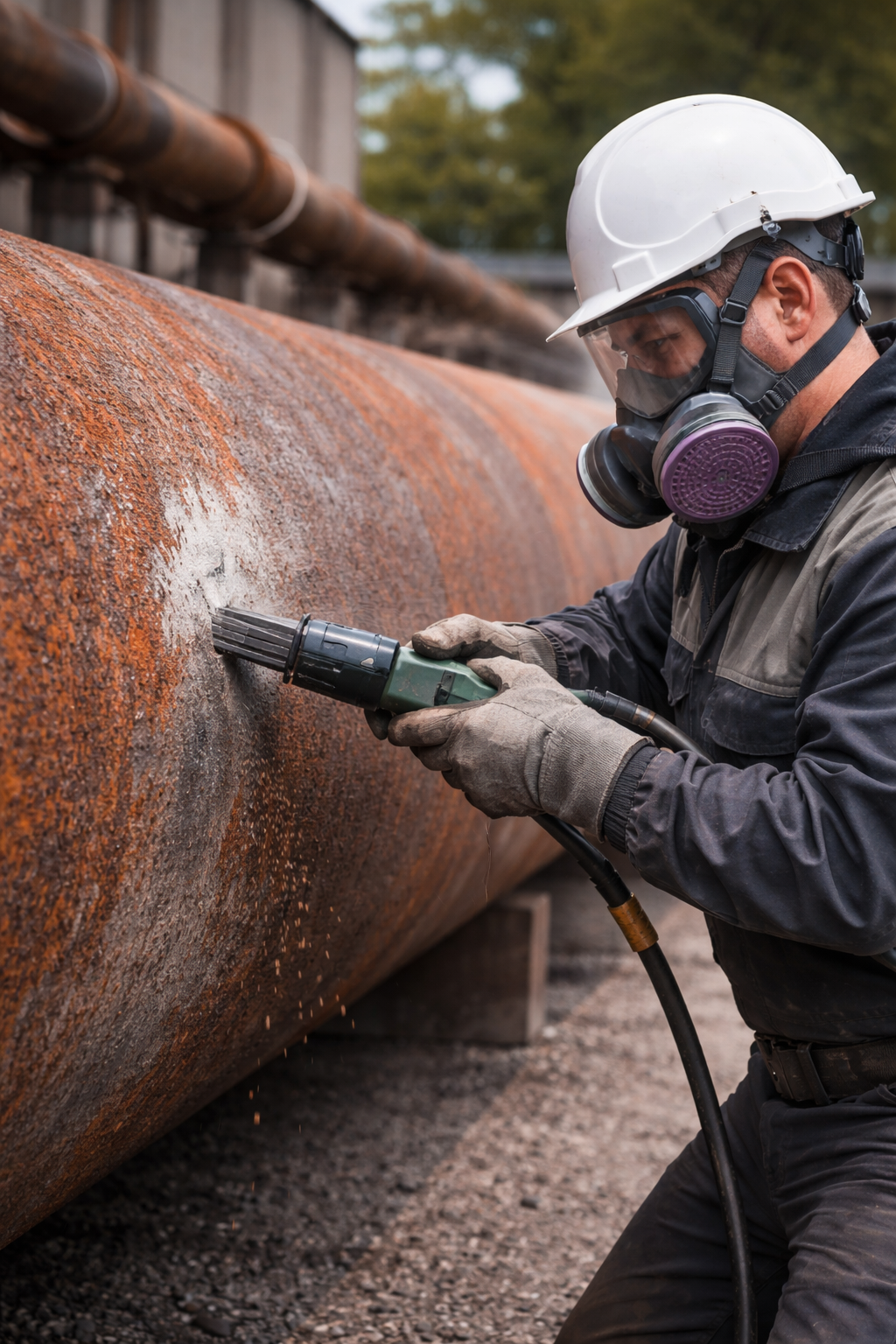
- Power Tool Cleaning (SSPC-SP 3 / SP 11)
Mechanical cleaning using grinders, needle guns, wire brushes, and rotary sanders to remove loose rust, mill scale, and failed coatings. SP 11 power tool cleaning to bare metal provides a near-white finish when blasting isn't feasible.
- Chemical Cleaning & Degreasing (SSPC-SP 1)
Thorough removal of oils, grease, wax, and chemical contaminants using solvents, alkaline cleaners, and emulsion systems. This step is essential before any mechanical preparation—contaminants left on the surface will compromise adhesion even on a perfectly profiled substrate.
- Surface Profile Measurement & Testing
Using replica tape (Testex), digital profile gauges, and comparator panels to verify that the surface anchor pattern meets the coating manufacturer's specifications—typically 1.5 to 4.0 mils depending on the system.
- Environmental Condition Monitoring
Continuous monitoring of ambient temperature, surface temperature, relative humidity, and dew point using calibrated instruments. Work only proceeds when conditions meet specification requirements.
SSPC Surface Cleanliness Standards
We select the appropriate preparation level based on the coating system, service environment, and asset criticality.
White Metal Blast Cleaning
The highest level of blast cleaning. All visible rust, mill scale, paint, and contaminants are removed. Used for immersion service, chemical exposure environments, and critical infrastructure where maximum coating life is required.
Near-White Metal Blast Cleaning
At least 95% of the surface is free of all visible residues. The most commonly specified standard for high-performance coating systems in marine, industrial, and infrastructure applications.
Commercial Blast Cleaning
At least two-thirds of the surface is free of visible residues. A practical choice for atmospheric service conditions where a balance between performance and cost is needed.
Brush-Off Blast Cleaning
Removes loose rust, loose mill scale, and loose paint while leaving tightly adhering material intact. Ideal for maintenance painting where the existing coating is still performing well.
Environmental Condition Monitoring
Coating application under incorrect environmental conditions is one of the leading causes of premature failure. We monitor four critical parameters continuously throughout every project.
Surface Temperature
Must be at least 5°F above dew point to prevent moisture condensation on the prepared surface.
Ambient Temperature
Typically maintained between 50°F and 120°F for proper coating cure and chemical reaction.
Relative Humidity
Generally kept below 85% to prevent flash rusting on freshly prepared steel surfaces.
Surface Profile
Measured and verified to match coating manufacturer specifications, typically 1.5–4.0 mils.
Substrates We Prepare
Different materials require different preparation approaches. Our team is experienced with all common industrial substrates.
Carbon Steel
The most common industrial substrate. We remove mill scale, rust, and existing coatings using abrasive blasting or power tools to achieve the specified cleanliness and profile.
Common standards: SP-5, SP-6, SP-10
Stainless Steel & Aluminum
Non-ferrous metals require gentler abrasives and careful technique to avoid contamination. We use aluminum oxide, garnet, or walnut shell media at reduced pressures.
Key concern: Preventing ferrous contamination
Concrete & Masonry
Concrete surfaces require shot blasting, scarifying, or acid etching to open the pore structure and create a profile that coatings can grip. Moisture testing is critical before coating.
Key concern: Moisture content & laitance removal
Previously Coated Surfaces
Maintenance and recoating projects require adhesion testing of the existing coating, followed by selective removal of failed areas and feathering of edges for a smooth transition.
Key concern: Compatibility with existing system
Industry Standards & Certifications
Our work meets or exceeds the requirements set by the leading surface preparation and corrosion control organizations.
SSPC Standards
The Society for Protective Coatings defines surface cleanliness levels (SP-1 through SP-16) that serve as the benchmark for industrial surface preparation across North America.
We hold SSPC-QP certifications for quality assurance.
NACE International
NACE (now part of AMPP) sets global standards for corrosion prevention. Their visual standards for surface preparation complement SSPC specifications and are used in tandem on most projects.
Our inspectors are NACE CIP Level certified.
ISO 8501 / 8502 / 8503
International standards covering visual cleanliness grades, surface cleanliness testing methods, and surface roughness characteristics. Required for projects with international specifications.
Full ISO compliance for global project requirements.
Frequently Asked Questions
Why is surface preparation important before coating?
Surface preparation is the single most critical factor in coating performance. Studies by NACE International show that up to 80% of all coating failures are caused by inadequate surface preparation. Proper preparation ensures the coating bonds mechanically and chemically to the substrate, maximizing adhesion, durability, and corrosion resistance.
What SSPC surface preparation standards do you follow?
We follow all SSPC surface preparation standards including SP-1 (Solvent Cleaning), SP-2 (Hand Tool Cleaning), SP-3 (Power Tool Cleaning), SP-5 (White Metal Blast), SP-6 (Commercial Blast), SP-7 (Brush-Off Blast), and SP-10 (Near-White Blast). The appropriate standard is selected based on the coating system requirements and service environment.
How long does surface preparation take?
Surface preparation timelines vary based on the substrate condition, size of the area, preparation method required, and environmental conditions. A typical commercial project may take 1-3 days for preparation alone. We provide detailed timelines during our initial assessment so you can plan accordingly.
What environmental conditions are required for surface preparation?
Surface preparation and coating application require specific environmental conditions: surface temperature must be at least 5°F above the dew point, relative humidity should generally be below 85%, and ambient temperature should be between 50°F and 120°F. We continuously monitor these conditions throughout the project to ensure compliance.
Do you provide surface preparation for concrete as well as steel?
Yes, we provide surface preparation for multiple substrate types including carbon steel, stainless steel, aluminum, concrete, and masonry. Each substrate requires different preparation techniques—for example, concrete may require shot blasting or acid etching to achieve the proper profile, while steel typically requires abrasive blasting.
Proper Preparation Is the Foundation of Every Great Coating
Don't risk premature coating failure. Contact DBrothers Painting Inc for professional surface preparation that meets SSPC, NACE, and ISO standards across Los Angeles and Southern California.